5 Things That Matter More Than Your Gantt Chart When Managing a Sahara Camp
Large-scale workforce camps in the Sahara are not construction projects with accommodation attached. They are small cities built from scratch in some of the most unforgiving terrain on earth.
I have spent the better part of two decades overseeing camp operations across southern Algeria, from Hassi Messaoud to Adrar, supporting energy and infrastructure projects ranging from 200 to over 1,000 workers. Locations where the nearest city was 100 kilometres away, daytime temperatures exceeded 50 degrees Celsius, and there was one road in and one road out.
The projects that succeed in these environments are rarely the ones with the most detailed Gantt charts. They are the ones that got the fundamentals right.
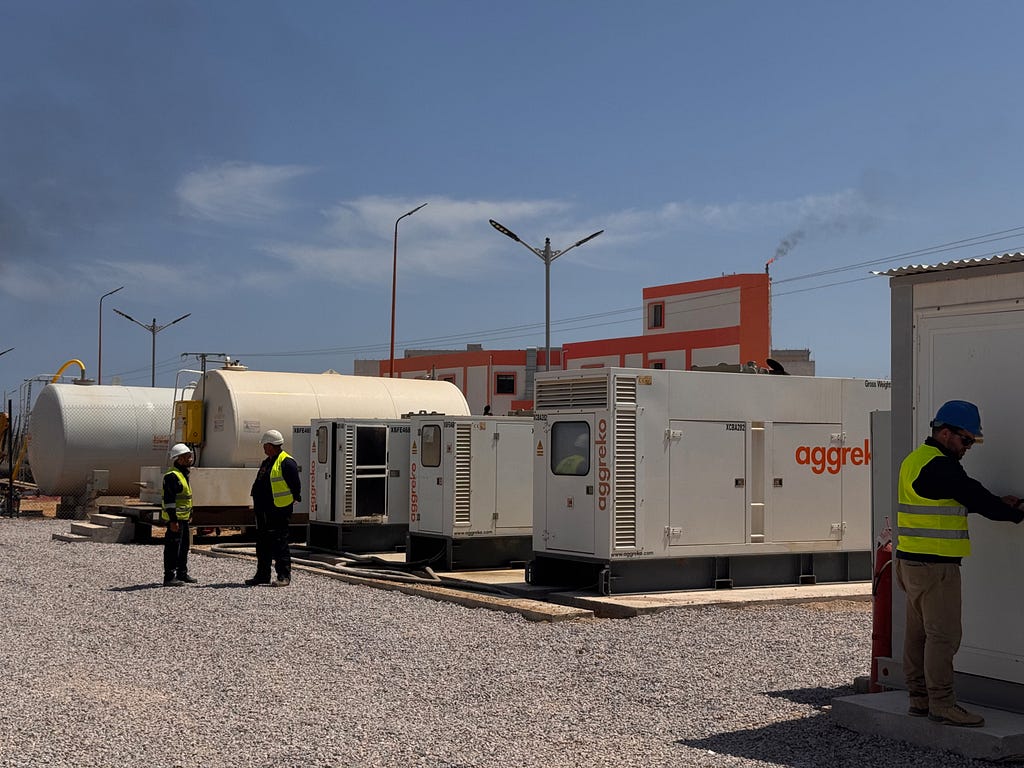
1. Power and Water Come Before Everything
Every project plan starts with mobilisation on Day 1. In practice, if the generators are not running and the water treatment plant is not commissioned, Day 1 does not happen.
A 1,000-person camp draws several megawatts of continuous load. Water in the Sahara is not a utility but a logistics operation requiring treatment, tanker delivery, and storage capacity measured in days. Generator redundancy is not a luxury. When ambient temperatures push cooling systems to their limits, a single failure can turn a functioning camp into an evacuation scenario.
The principle: commission power and water first. They are the first systems you bring online and the last ones you shut down.
2. The Kitchen Is Your Most Important HR Function
In an environment where workers are separated from their families, living in shared accommodation, and working long rotations in extreme heat, food is the single most important factor in morale. I have seen experienced engineers request transfers not because of safety or pay, but because the food was poor.
A camp of 500 to 1,000 workers produces 1,500 to 3,000 meals per day. Fresh produce requires cold chain management across hundreds of kilometres. A supply disruption that leaves a camp without fresh vegetables for three days will do more damage to retention than a delayed salary.
The lesson: invest disproportionately in catering. If you get food right, you can survive most other problems.
3. Logistics Is a Daily War
The supply chain for a remote camp typically depends on a single road that can be blocked by sandstorms, flooding, or administrative checkpoints. A single disruption cascades across every function.
This is why I apply a minimum of 10 to 15 days of essential supplies on site at all times: fuel, water treatment chemicals, food staples, medical supplies, and critical spare parts. Some project managers arrive expecting two- to three-day replenishment cycles. They learn quickly.
The rule: if your site is more than two hours from the nearest hospital, your logistics plan is also your risk management plan.
4. Local Hiring Is Strategic, Not Optional
Every large project in the Algerian south operates within a community context. Local employment, local procurement, and respectful engagement with community leaders are not CSR add-ons. They are operational necessities.
I have worked on projects where strong local relationships provided early warning of disruptions, smoothed permitting, and created reliable labour pipelines. I have seen others where poor community engagement led to road blockades and weeks of delay.
The approach: engage early, hire locally where feasible, procure locally where quality allows, and maintain open communication with community representatives. This is not philanthropy. It is project management.
5. Night Shifts and Holidays Are Where Leadership Is Tested
At 3am on a public holiday, when a generator trips and the backup fails, the quality of your operation is exposed. Is there a duty manager on site with the authority to act? Is the maintenance team equipped to respond?
The camps that handle crises well are not the ones with the thickest emergency manuals. They are the ones where leadership is present, where the duty roster is taken seriously, and where junior managers are trusted to act before waiting for instructions from someone 1,000 kilometres away.
The standard: if your camp cannot operate at the same level at 3am on a Saturday as it does at 10am on a Tuesday, you have a management problem, not a staffing problem.
The Bigger Picture
If the camp fails, the workforce leaves. If the workforce leaves, the project stops. No amount of engineering excellence can compensate for a camp that does not function.
The projects that succeed treat camp operations as a first-order priority, not a line item to be minimized. Twenty years in, I am still learning. But these five principles have held true across every project, every client, and every sandstorm.
Badou Ba is the founder of AYMTEC, a consulting practice specialising in project management, operations advisory, and business development for energy and infrastructure projects across North and West Africa. More at badouba.com.